
SimplifyC++ Article
Essential Electronics Basics for Computer Programmers to Understand the Development of Integrated Circuits and Processor
Essential Electronics Basics for Computer Programmers to Understand the Development of Integrated Circuits and Processors
Understanding basic electronics is helpful for programmers to grasp how computers and processors, which they rely on for programming, work. This article aims to explain these basics in the simplest way possible with illustrative examples.
1. The Principle of Electricity and Electrons
What Is Electricity?
Electricity is the flow of electrons through a conductor (such as wires).
Electrons are tiny negatively charged particles that orbit the nucleus of an atom.
Voltage, Current, and Resistance
Voltage (V): The force that drives electrons to flow, measured in volts.
Current (I): The amount of electrons flowing at a given time, measured in amperes.
Resistance (R): The opposition encountered by the current as it flows, measured in ohms.
Ohm's Law
It expresses the relationship between voltage, current, and resistance: V=I×RV = I \times RV=I×R Where VVV is voltage, III is current, and RRR is resistance.
Why This Matters to Programmers:
Understanding how electricity flows helps in grasping how data moves within processors and memory.
2. Basic Electronic Components
Resistors
Limit the amount of current flowing in a circuit.
Used in processors to adjust signals and reduce noise.
Capacitors
Store electrical charges for a short period.
Used in computers to filter signals and provide extra power when needed.
Diodes
Allow current to flow in one direction only.
Used in computers in circuits for rectifying electrical signals.
Transistors
The fundamental component that revolutionized computing.
Act as tiny electronic switches that can be turned on or off.
Used in building integrated circuits and processors.
Integrated Circuits (ICs)
Chips containing a vast number of interconnected transistors.
Form the foundation of modern processors.
3. Transistors and Logic Gates
What Is a Transistor?
Acts as a switch or an amplifier for current.
Has three terminals: Base, Collector, and Emitter.
How Does a Transistor Work?
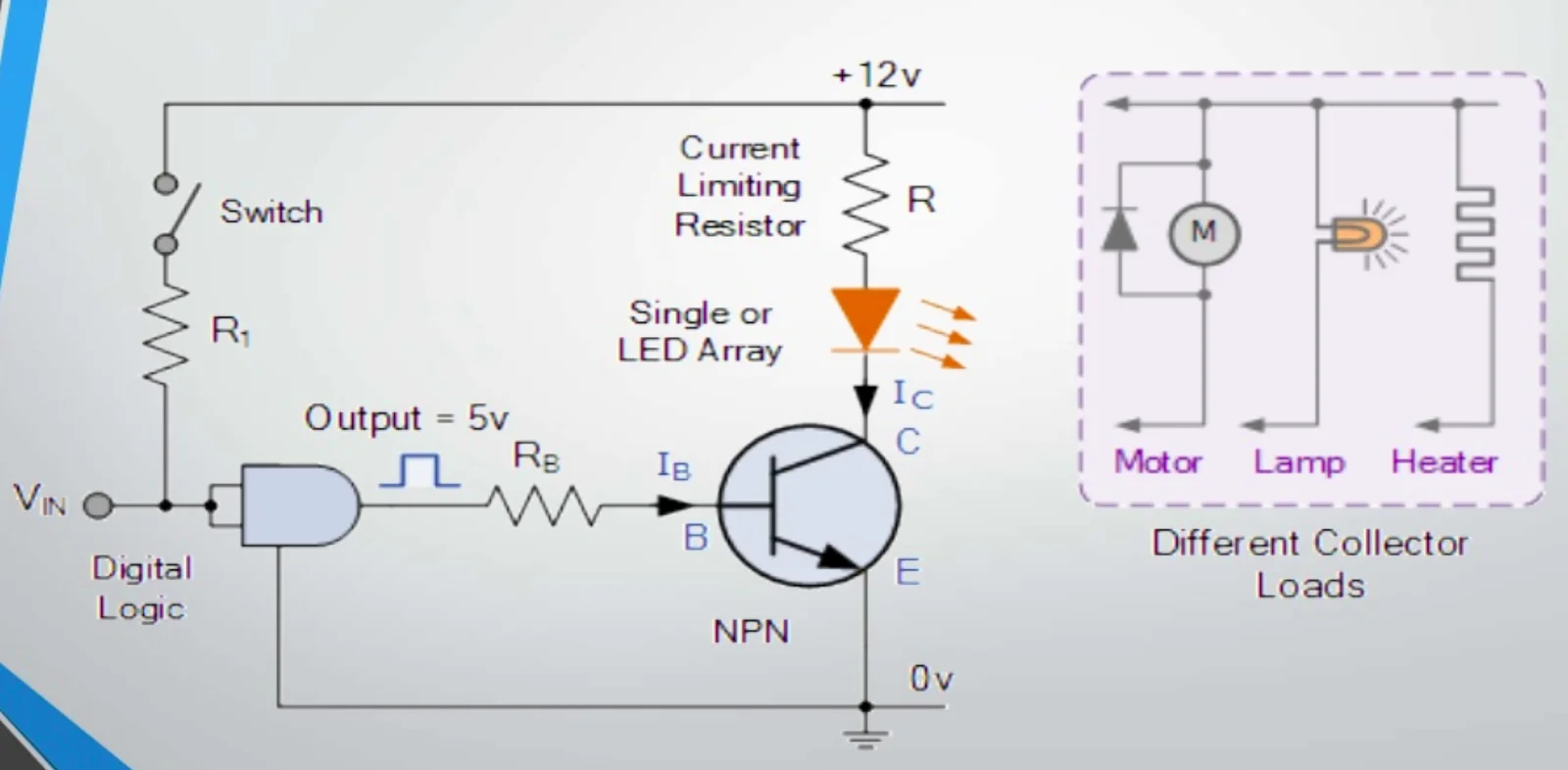
When voltage is applied to the base, the transistor allows current to flow between the collector and emitter.
Logic Gates
Built using transistors.
Perform logical operations (AND, OR, NOT).
Execute instructions inside processors.
4. Understanding Data in Digital Electronics
Digital vs. Analog Systems
Analog signals: Continuously varying (e.g., sound).
Digital signals: Take only two values (0 and 1), representing "off" and "on."
Bits
The basic unit of digital data.
0 = no voltage, 1 = voltage present.
Impact of Digital Electronics on Computers
All computing processes are translated into digital signals managed by electronics.
5. The Evolution of Integrated Circuits and Processors
Integrated Circuits
Combine thousands (or even billions) of transistors on a small chip.
Their development has increased speed, efficiency, and reduced processor size.
Moore's Law
States that the number of transistors in a processor doubles approximately every two years, enhancing performance.
Processor Manufacturing Technologies
Transistors have become smaller, enabling more to fit on a chip and reducing power consumption.
6. Illustrative Examples
Example 1: Logic Gate Operation
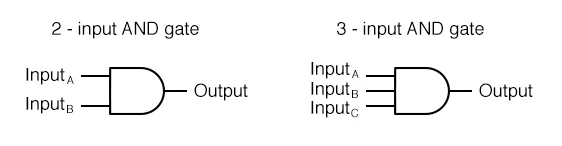
AND Gate: Works only if both inputs are 1.
If the input signals are (5V, 0V) to an AND gate, the output will be 0V.
Example 2: Transistor as a Switch
If the base voltage is 0, no current flows (OFF).
If the base voltage is sufficient, current flows (ON).
Example 3: RAM Memory
Operates using cells that store "0" or "1" with capacitors and transistors.
7. Why This Knowledge Is Important for Programmers
Understanding Mechanics: Helps optimize software to work efficiently with hardware.
Embedded Systems Design: Directly programming processors requires electronics knowledge.
Troubleshooting and Optimization: Assists in identifying performance issues caused by the interaction between software and hardware.
8. Illustrations
Simple Diagram of a Transistor as a Switch:
Description: Shows how current is controlled using base voltage.
AND Gate Illustration:
Description: Demonstrates two inputs (A and B) and the resulting output.
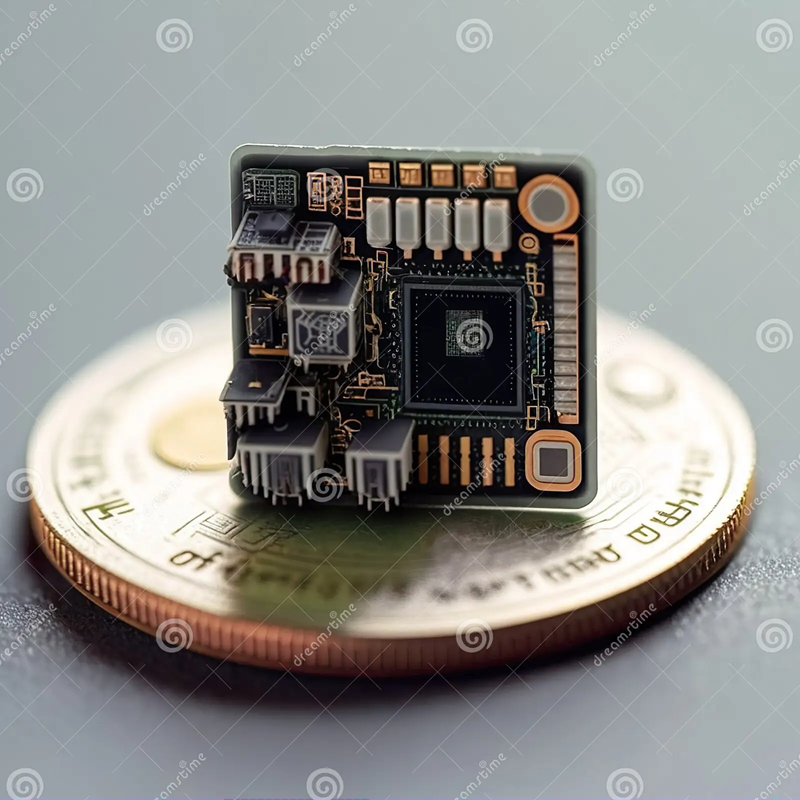
Processor Chip (Integrated Circuit):
Description: Shows the size of a chip compared to a coin to highlight its compactness.
Conclusion
Understanding electronics basics helps programmers gain deeper insight into how computers function. This knowledge is particularly crucial for those working in embedded systems or low-level software development, providing all programmers with a clearer picture of how their code interacts with hardware.
What did you think?
Sign in to react or comment.
Comments
0No comments yet.